From Novelty to Commodity
A great product begins as a novelty.
With time, it becomes a commodity.
Once a product is commoditized, the game changes. It’s no longer strictly about innovation. It’s about branding and, of course, storytelling.
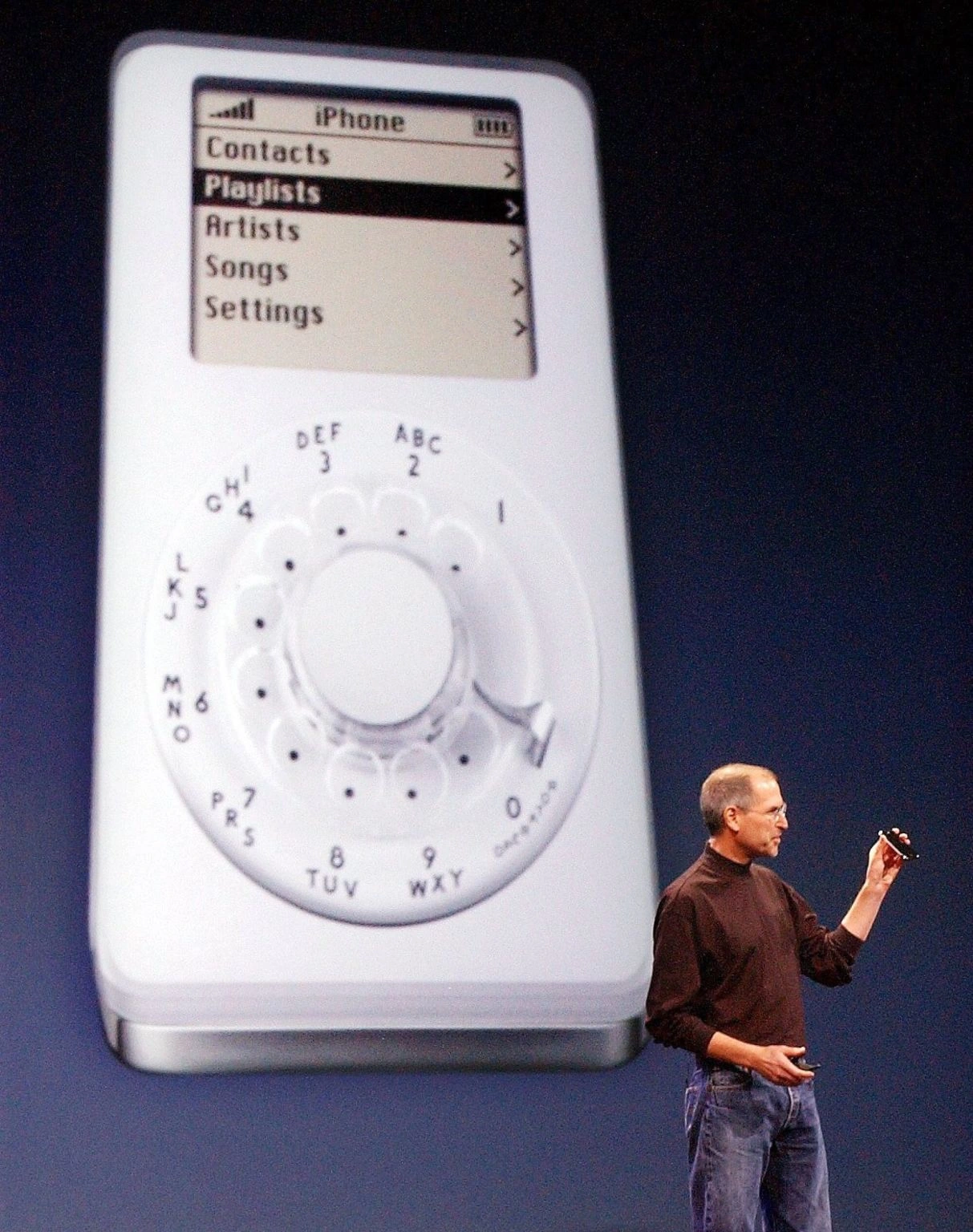
Take the iPhone, for example.
When it was unveiled in 2007, the iPhone was something out of a sci-fi flick.
Jobs knew Apple had made something truly novel. He also knew the iPhone wouldn’t remain novel forever.
That’s why he invested heavily in branding and storytelling.
Today, the iPhone competes in a crowded smartphone market. Apple’s brand and story remain part of what distinguishes it.
What becomes ordinary
Take a good, hard look at any product widely used today. What once was a novelty is now a commodity.
Email. Music streaming. Air travel. Laptops. Energy drinks. Automobiles. Coffee pods. Social media. Bluetooth earbuds. Cordless vacuums.
Need I go on?
Software
This commoditization is happening right now in software.
Ten, twenty and thirty years ago, software was a novelty. It was difficult to compete with because it was difficult to make.
Nowadays, with the help of AI, a kid can create a working Salesforce-like prototype in a week.
A prototype is not an enterprise product. But the cost of showing that an idea can work has fallen sharply.
As more of the features become familiar, branding and storytelling carry more of the work of differentiation.
Enterprises will endure if they can build a brilliant brand and tell a stunning story.
Customers don’t want replicas. They want the real thing.
The original iPhone introduction at Macworld, 9 January 2007. Apple keynote footage; archive upload by macessentials.
Watch on YouTube