IX
The Rume,What if the people who shaped how you think were still in the room?
- Client
- The Rume, Lorenzo Scardicchio's own
- Year
- 2026
- Made
- The wall: website · The conversation, kept by Mnemosyne · The reliefs
- Status
- Live at withrume.com
Explore a library of remarkable minds. Find a thinker, read their words, and follow the sources.
Read more
Project overview
The Rume
The Rume is a source-grounded library of books, talks, interviews, notes, frameworks, and reusable AI instructions. It turns a static body of thought into a conversation without pretending that the person is literally present.
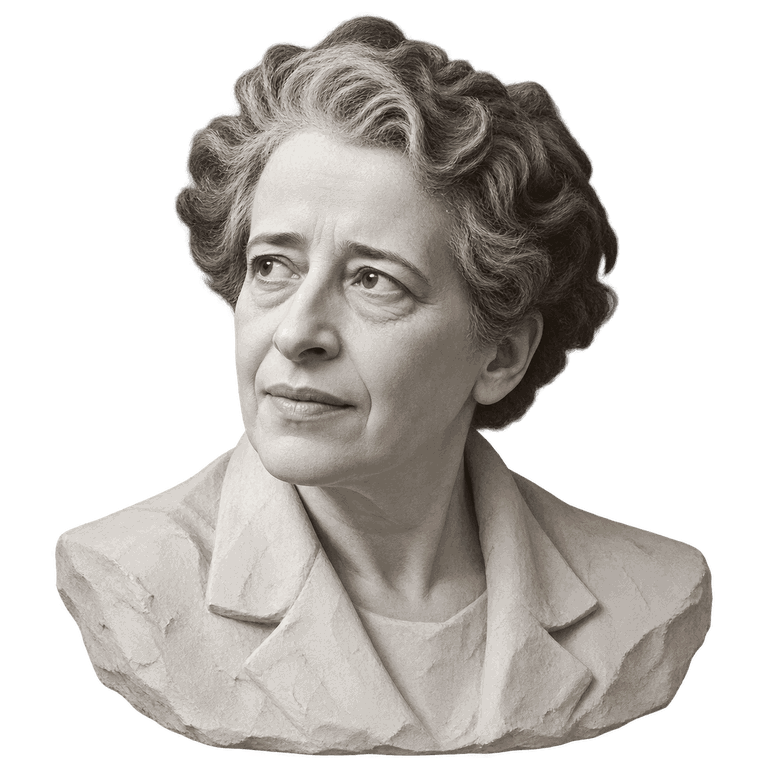
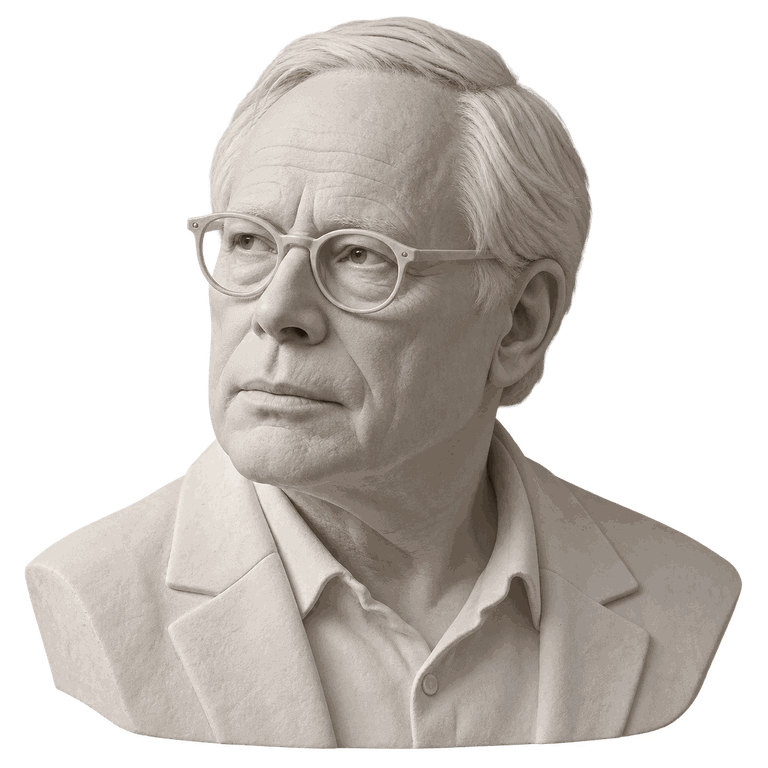
A wall of portrait busts in white plaster, four hundred minds you drag across in any direction or search by name, subject or biography, each with a profile of its sources and verified excerpts. The table seats one to four of them around a question; Ask them hands it to the librarian, who finds their words and where they come from. Carve a name adds someone to your own wall. The governing distinction: a direct quote is the person's own language and must carry a source; a summary is a compact account of documented material; an application is present-day inference and must be labeled as such.
- 400
- Minds on the wall
- 4
- Seats at the table
- 13
- Languages the wall speaks
- 1,836
- Source passages behind Steve Jobs alone
THE RUME
The Rume
Wordmark
THE RUME, in spaced capitals, over the wall; the page is the colour of paper and the busts are white plaster, so the words sit quietly.
- Paper the page#F3F1EC
- Paper, lit the surface#F4F2ED
- Plaster the reliefs#FFFFFF
- Ink the words#1A1A1A
The Rume
Colour
Paper, plaster and ink: the page a warm off-white, the reliefs white plaster bas-relief on paper, the words near-black. Observed on the wall at withrume.com.
EB Garamond
The words · 400
Bring a question or choose a thinker.
Cormorant Garamond
Navigation and buttons · 500
THE TABLE · CARVE A NAME · ASK THEM
The Rume
Type
EB Garamond for the labels and the conversation, Cormorant Garamond for the navigation and the buttons, as the census found them.

The Rume
A relief
Steve Jobs, as the wall carves him: a portrait bust in white plaster, three-quarter view, on paper.
Design note
The wall
Explore the wall: drag or scroll in any direction across four hundred portrait busts in white plaster, or find a mind by name, subject or biography. Centre brings the wall back to the core group around Steve Jobs; each person opens a profile of sources, portrait credits and verified excerpts.
Design note
The table
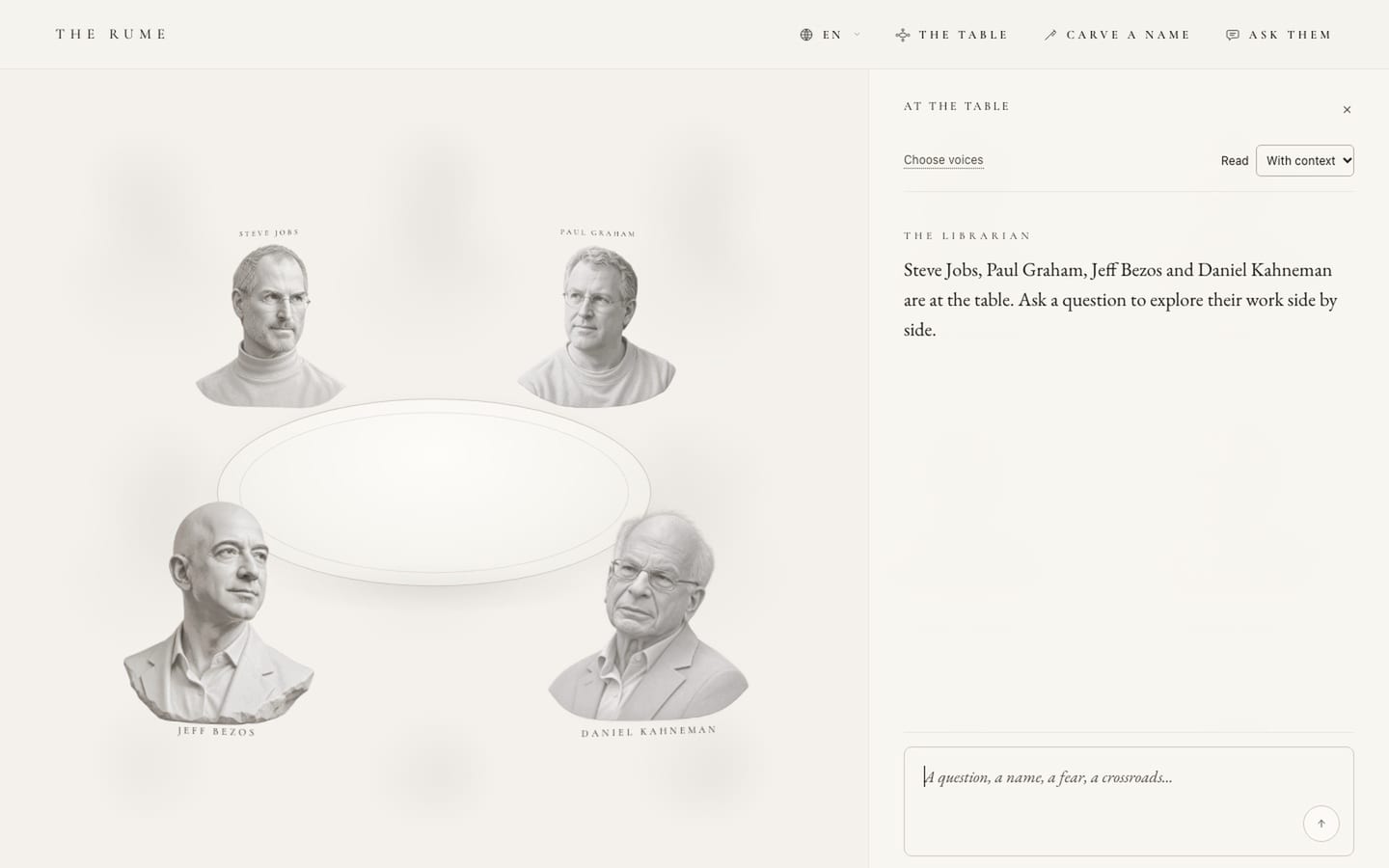
Choose your company: a place for your question. Seat one to four people from the wall, starting with their words: browse them by name, expertise or idea, or bring a challenge, then ask the table. Their portraits stay visible in the conversation.
Design note
Ask them
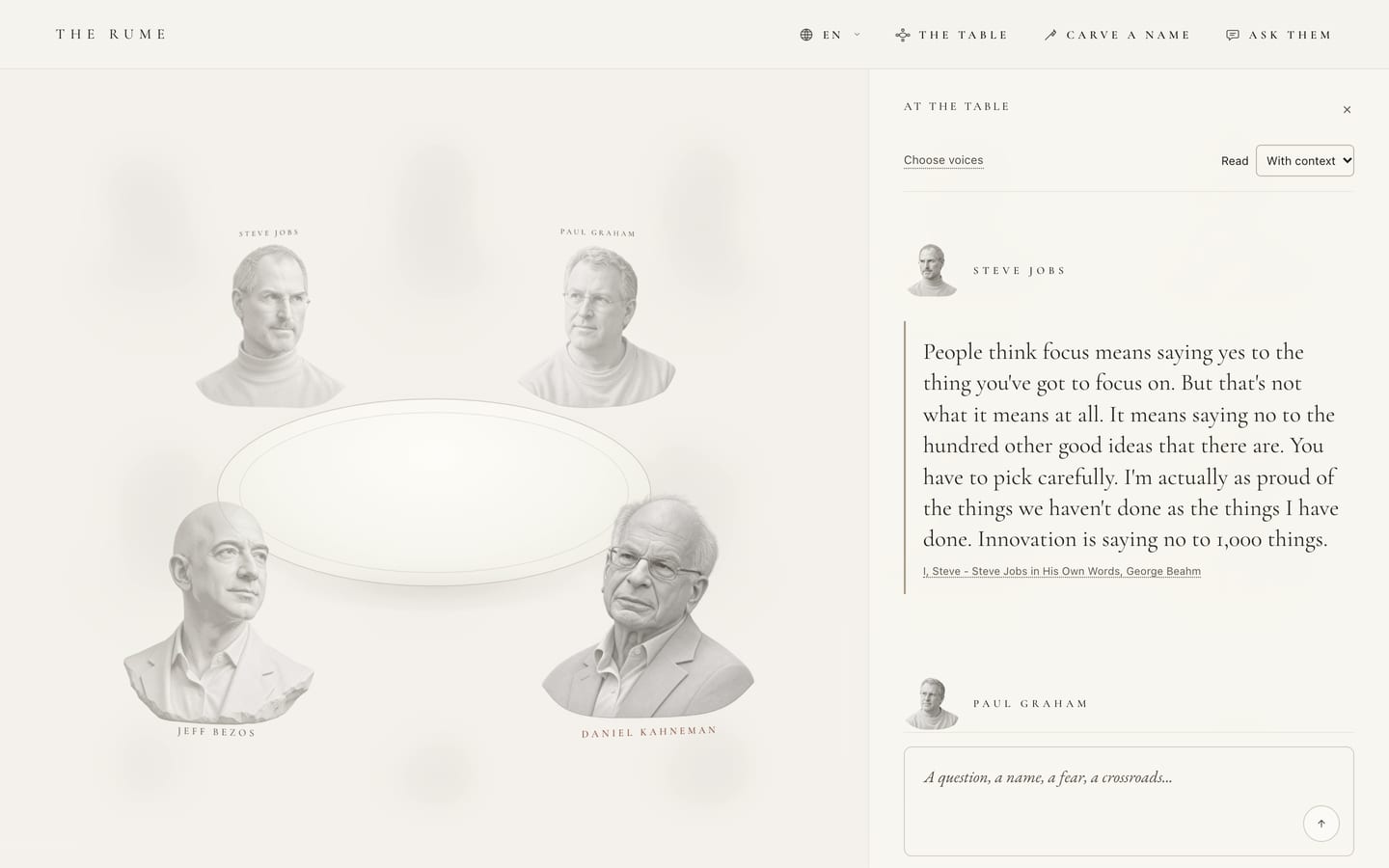
"Bring a question or choose a thinker. I'll find their words and where they come from." The librarian speaks about documented work in the third person; only verified entries can produce a quote, and the server inserts the stored text and its source rather than trusting a generated one.
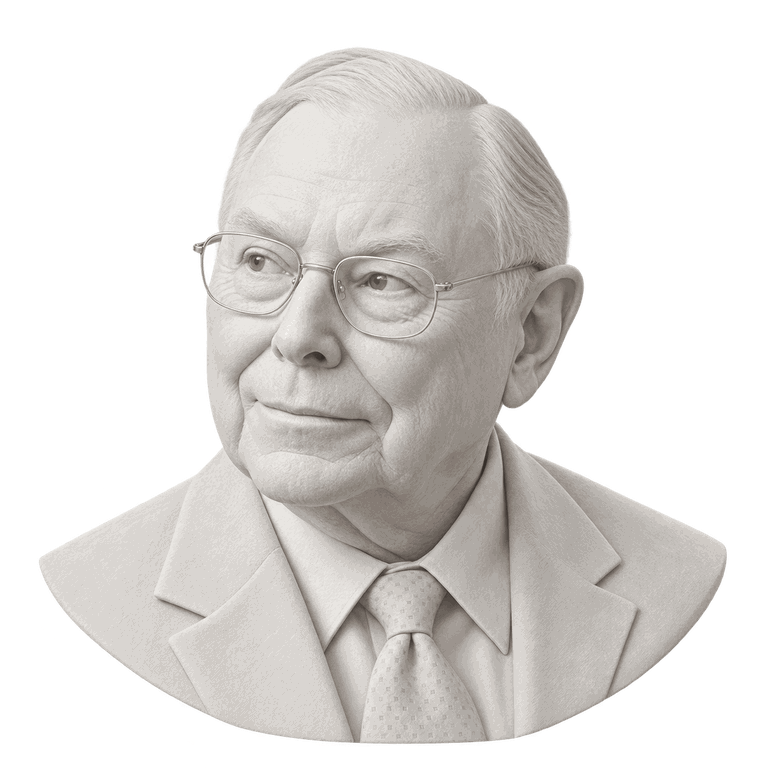

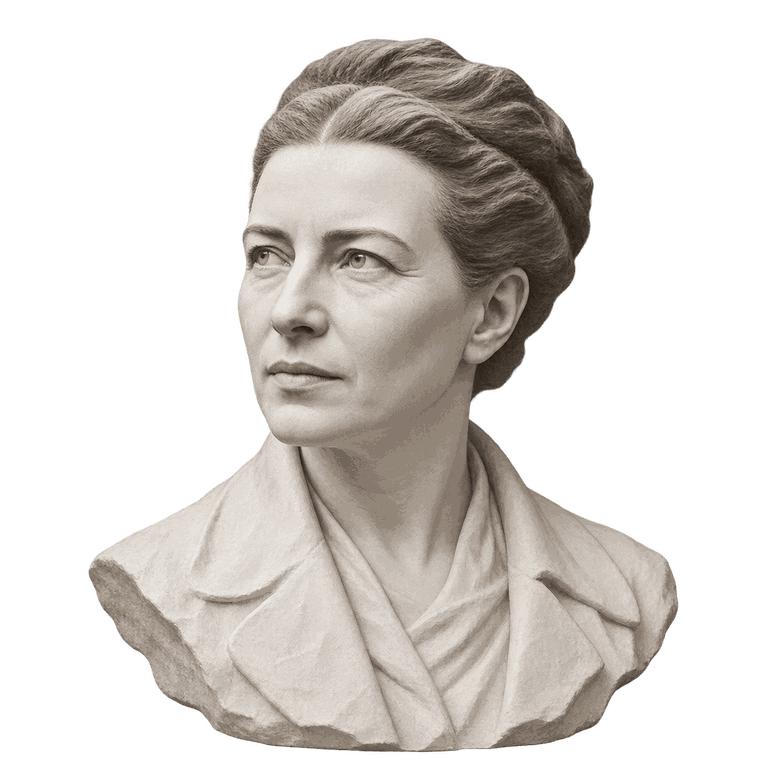
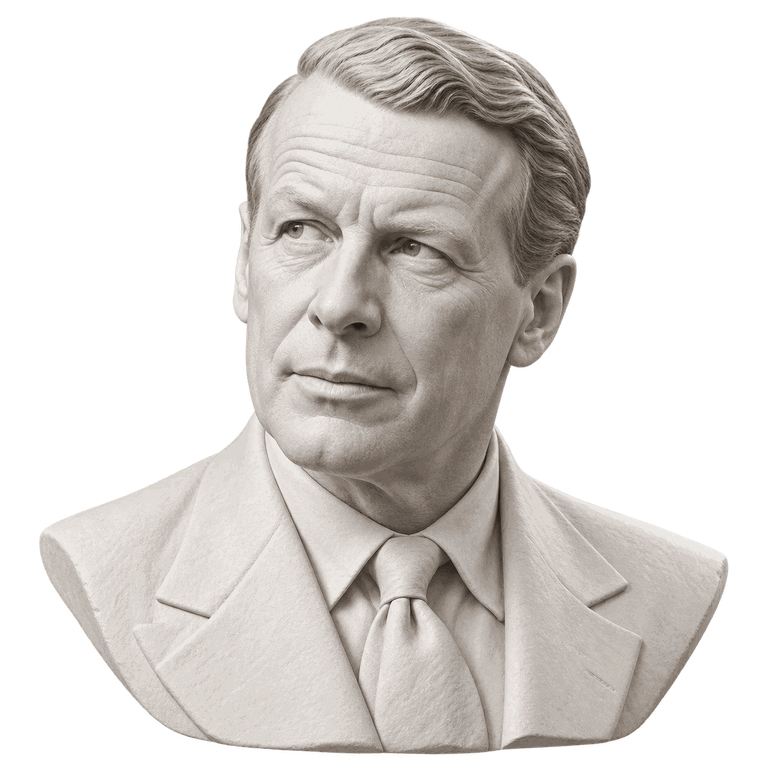
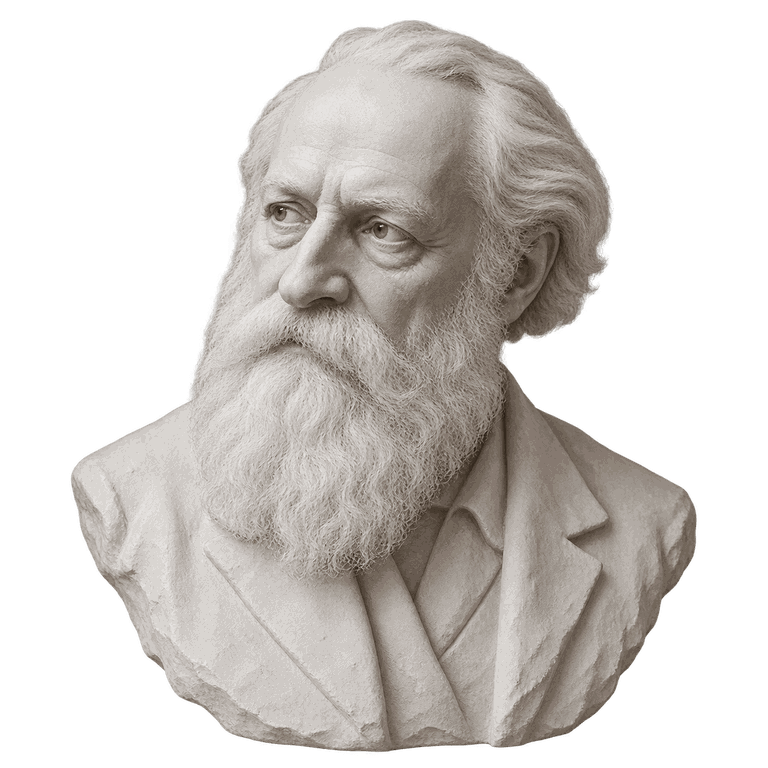
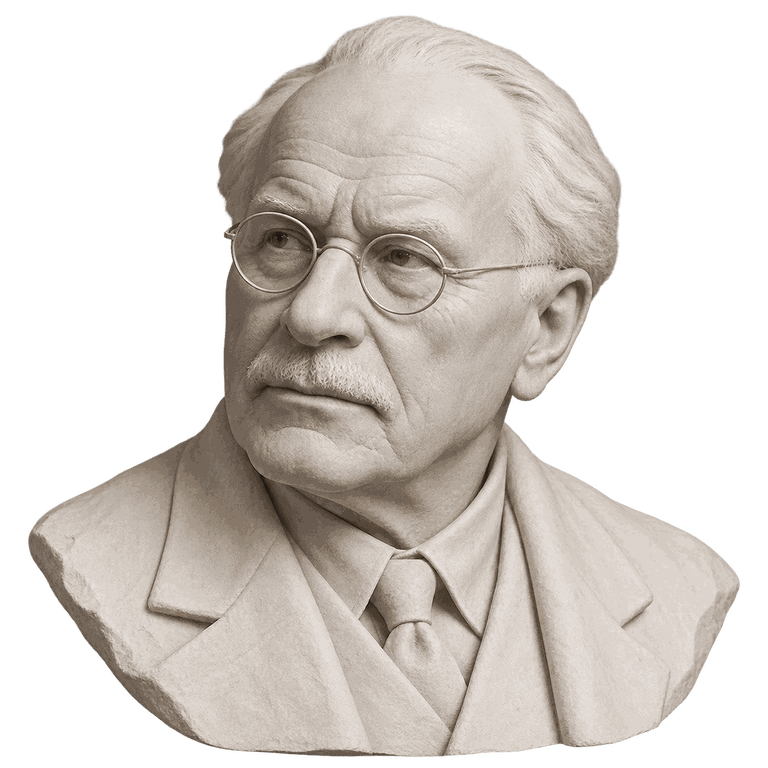
“Bring a question or choose a thinker. I'll find their words and where they come from.”
Design note
Carve a name
Carve a name searches public profiles with portraits, checks that the result is a person, and adds them to the visitor's own wall, with a link to share. It never edits the public roster.
Design note
The rule of the Rume
A direct quote is the person's own language and must carry a source. A summary is a compact account of documented material. An application is present-day inference and must be labeled as such.
Live at withrume.com
See it for yourself.
Next project