Bet on People
The right people can create possibilities beyond the original investment.
2 minute read / excerptBegin readingSilicon Valley exists because one investor bet on eight scientists before they had a company, a product, or a plan.
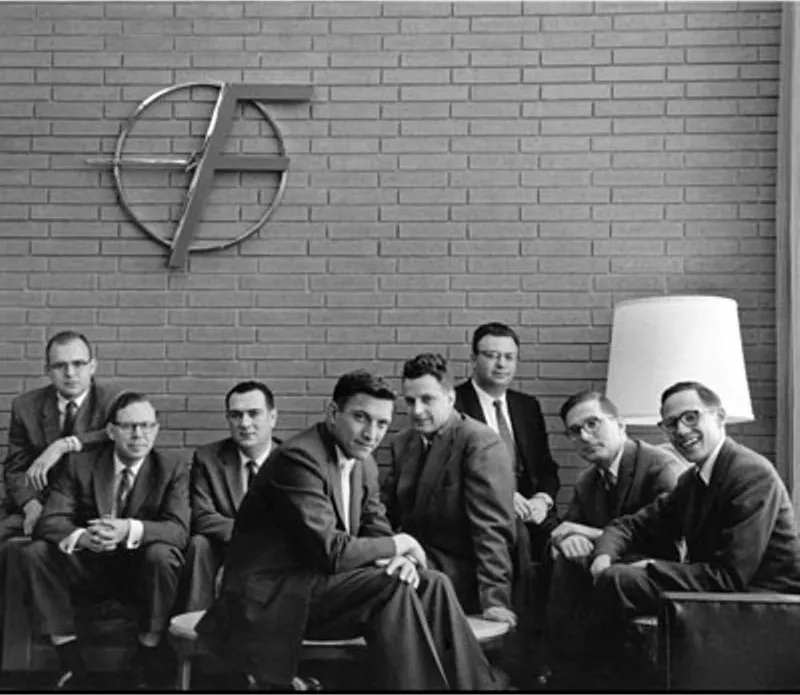
In 1957, those eight men quit on William Shockley.
A Nobel laureate for helping invent the transistor, Shockley hired them to build the next generation of it south of San Francisco. He was brilliant, yet extremely challenging to work for. The stories were unreal, e.g., when a secretary cut her finger, he was convinced someone had done it on purpose and ordered the whole staff to take lie detector tests. When they asked Shockley's backers to replace him, the answer was no. So they left together.
Six of them held PhDs. They wanted one thing: a single employer willing to hire all eight as a group. No company would. Everyone wanted to buy technology, and nobody knew what to do with eight scientists who only came as a set.
Then a letter from the group reached Arthur Rock, a young associate at a New York investment bank.
Rock saw what the eight had missed about themselves. They were asking to be hired, but he decided to bet on them directly.
So he told them to stop looking for a job and start their own company, and then went to raise the money for it.
He pitched 35 companies. Each one said “no,” until, eventually, Sherman Fairchild said yes, and Fairchild Semiconductor was born with a $1.38 million loan.
Here's why the bet worked: People compound.
Fairchild itself became enormously successful. Then its engineers broke off to start their own firms, and those firms spun off more firms, until one company had seeded an entire region. The Valley still calls that family tree "the Fairchildren."
The bet paid off again a decade later. When Robert Noyce and Gordon Moore grew restless at Fairchild, they went back to Rock. With the same people (and the same bet), he helped them
A fragment from our reading. The supplied source ends here.