Borrow While You Can
"Bet the company" is a phrase that usually lives in a pitch deck. In late 2006, Ford put it in a loan document. To get the money, it mortgaged its own logo.
The Blue Oval, Ford's mark since 1927, was the collateral. Default, and a group of banks would own the name.
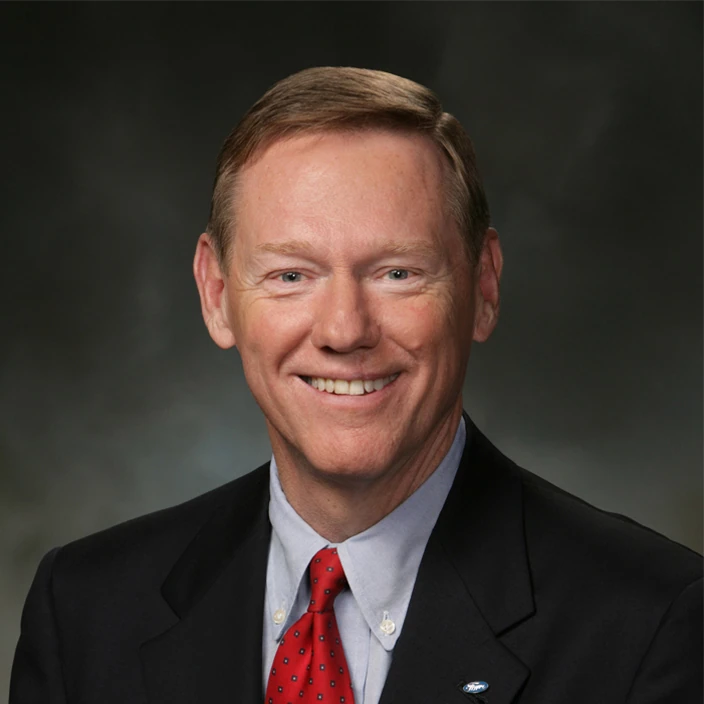
Alan Mulally had been at Ford for a matter of months. He came from Boeing, where he spent close to four decades building airplanes. He had never built a car. And Ford was dying. It lost $12.7 billion that year, the worst in its 103-year history, $5.8 billion of it in the quarter he signed.
His plan was to rebuild the entire company. Close 16 plants and start designing cars people actually wanted. But Ford couldn't afford any of it. It expected to burn $10 billion just staying alive through 2009, plus another $7 billion on new product, before it earned a dollar back. And its debt was junk - nobody would lend it a cent unsecured.
So Mulally pledged the hard assets: the factories, tooling, and even the land under the buildings. Ford had never pledged its core operations before. Not once in the life of the company.
The banks wanted more. Citi, Goldman, and JPMorgan, the three leading the loan, demanded the Blue Oval too.
$23.5 billion is what Mulally was eventually able to borrow against all of it. He had his own name for the deal: the world's largest home improvement loan.
Bill Ford, the great-grandson of the founder, signed the papers that pledged the family name. He described the moment years later: "My heart stopped for a moment."
It would be five and a half years before Ford got the oval back.
At the time, the whole thing read as surrender. An outsider CEO pawning the crown jewels on the way down.
Then he did the part nobody asked for. He took more than the plan called for, and called the extra a cushion against a recession or some other unexpected event.
Two years later, the financial system fell apart. General Motors and Chrysler needed money and found there was none left to borrow. Every credit window on earth had closed, so they went to Washington because Washington was the only lender left. They took the bailout and went through bankruptcy.
Ford did neither. No bailout. No bankruptcy.
Mulally didn't borrow because he knew what was coming. He borrowed while he still could, and that made all the difference.
The "cushion" turned out to be the company.