Conviction on a Napkin
A paper napkin once sold at auction for almost a million dollars. $968,600.
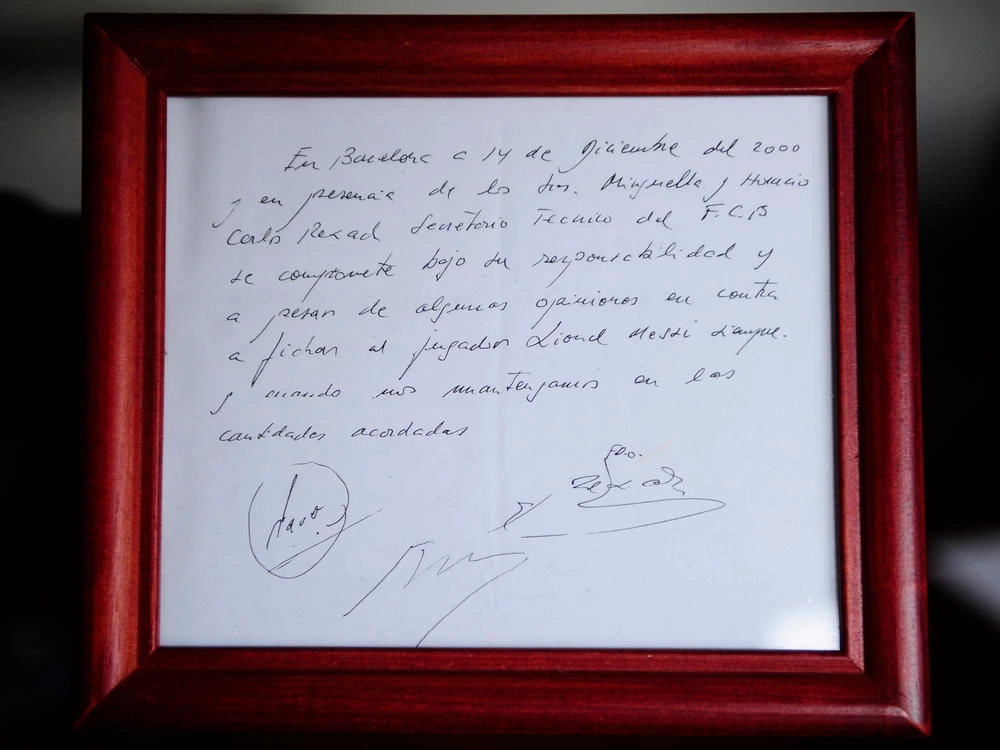
Written on it was a date in December 2000, a few lines of Spanish, and a signature that bound one of the biggest clubs in the world to a thirteen-year-old boy.
That boy was Lionel Messi. At eleven, doctors found his body had stopped making enough growth hormone. The medicine cost close to $1,000 a month and had to be injected into his own legs, by him, every night. His boyhood club in Argentina couldn’t cover it. A bigger, wealthier club had its chance and let it go.
So his father flew him to Barcelona for a two-week trial so quietly that back home the rumor was he’d fallen ill with hepatitis. Barcelona’s technical director watched the boy with a ball at his feet for a few minutes and stopped caring what the spreadsheet said.
When the boardroom hesitated, he asked a waiter for a napkin and wrote out the deal himself. The text promised to sign Messi, and I quote, “regardless of any dissenting opinions.” That is what conviction actually looks like. A decisive yes, in writing, before the rest of the room has caught up.
Conviction cannot be delegated and it cannot be faked. And a napkin worth almost a million dollars is the proof that the biggest returns come from the talent the machine cannot price yet.