The Cola Wars
The associations around a product can be as durable as the product itself.
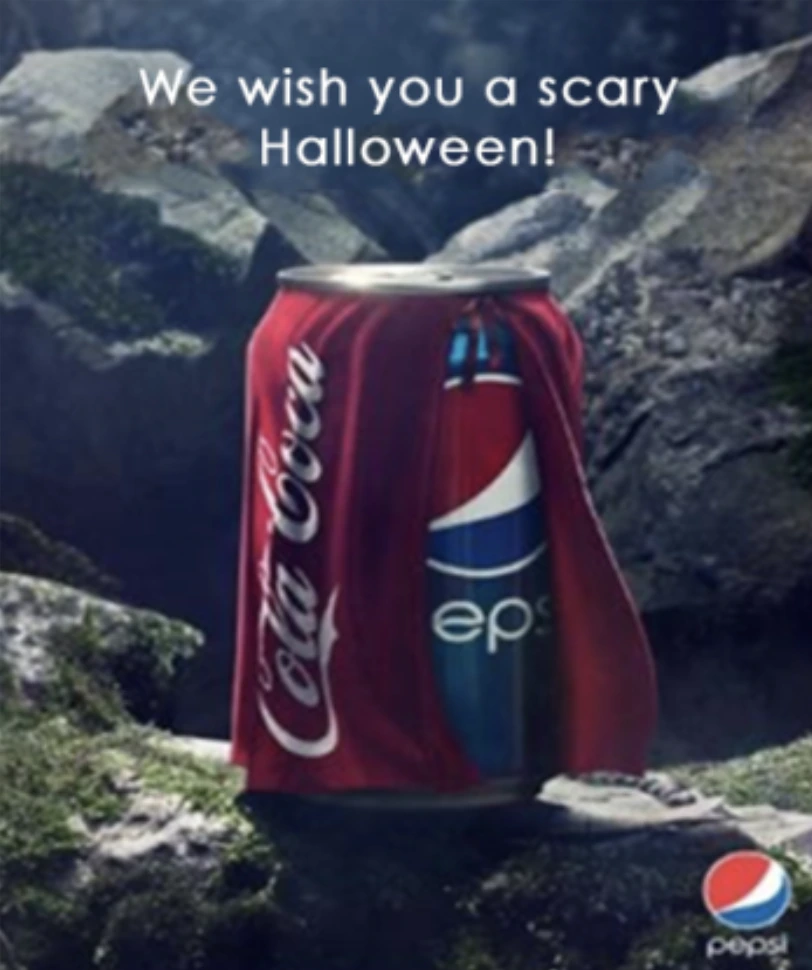
4 minute readBegin readingPepsi dressed its can in a Coca-Cola cape for Halloween.
This is the Cola Wars - The greatest rivalry the beverage industry has ever seen.
On one side there’s Coca-Cola with 43% of the non-alcoholic beverage market share.
On the other, there’s Pepsi - with about 33% market share.
For the past 84 years, Pepsi has tried and failed to beat Coca-Cola.
And after 3 blind taste tests proving most consumers prefer the taste of Pepsi over Coca-Cola…
And multiple studies that prove Pepsi is a healthier alternative…
Coca-Cola remains the #1 beverage company in the world.
Why?
And how did this rival lead to Pepsi (almost) becoming the 6th largest military in the world?
Great question.
The Story Of Pepsi
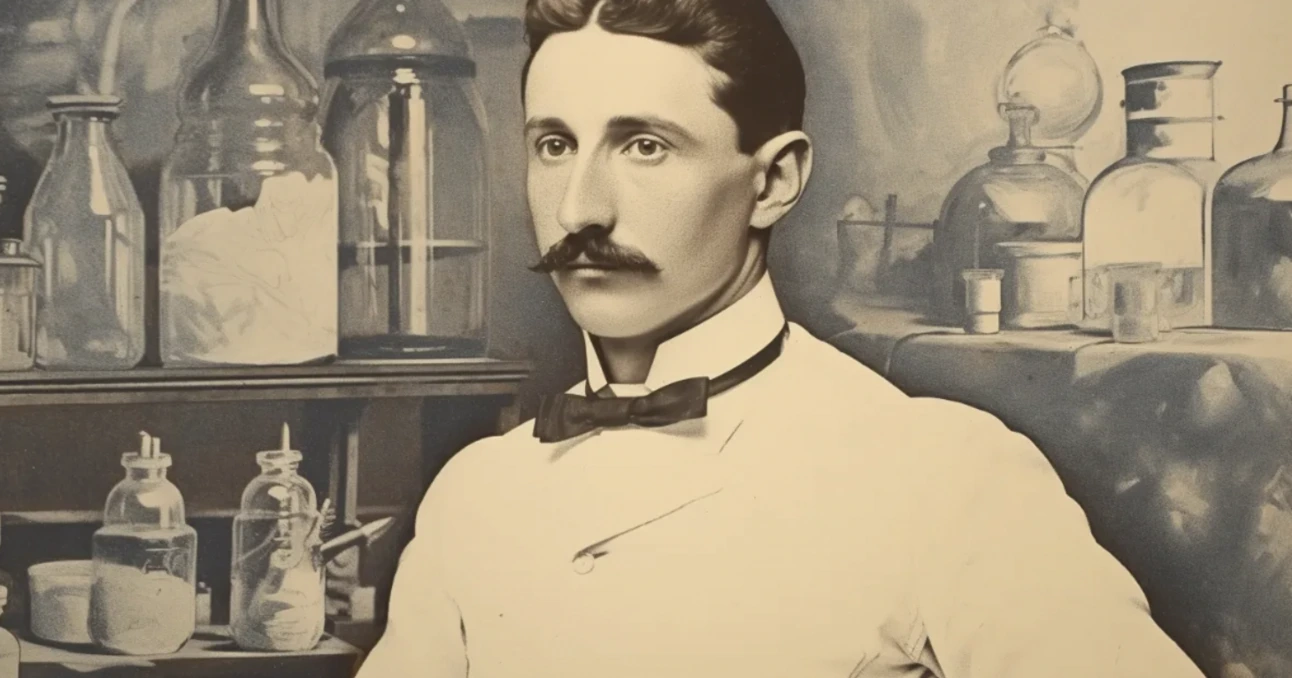
Pepsi was founded by a small-town pharmacist in North Carolina, just 7 years after the beginning of Coca-Cola.
At the time, Coca-Cola was a growing drink company known for its great taste, and unfortunately for them…
Tons of sugar.
So Caleb Bradham (founder) found a gap in the market - something that tasted as great as Coca-Cola but without the consequences.
Enter Pepsi.
The Founder Of Pepsi
For the next 50 years, Pepsi would try to keep its business afloat, claiming bankruptcy twice and changing owners at least 3 times.
All while watching Coca-Cola grow year after year.
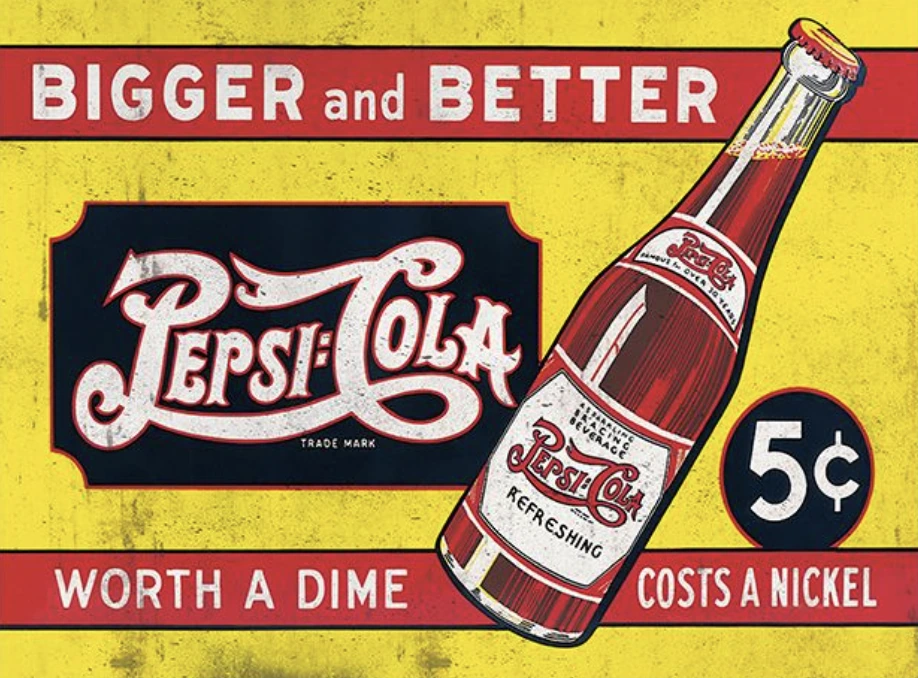
It wasn’t until 1940 that Pepsi made advertising history with “Nickel, Nickel,” that Pepsi began to make waves in the drink industry.
But 84 years later Pepsi still has yet to beat Coca-Cola’s iron grip on the industry, even after proving to the world that Pepsi has more to offer.
Why?
Because Coca-Cola has something that Pepsi has tried and failed to buy… Loyalty.
America’s Favorite Soda
I’ve spent 7 hours diving deep into Coca-Cola’s marketing strategy this week.
I found 3 key components in their marketing strategy that Pepsi missed.
1 - America’s favorite soda
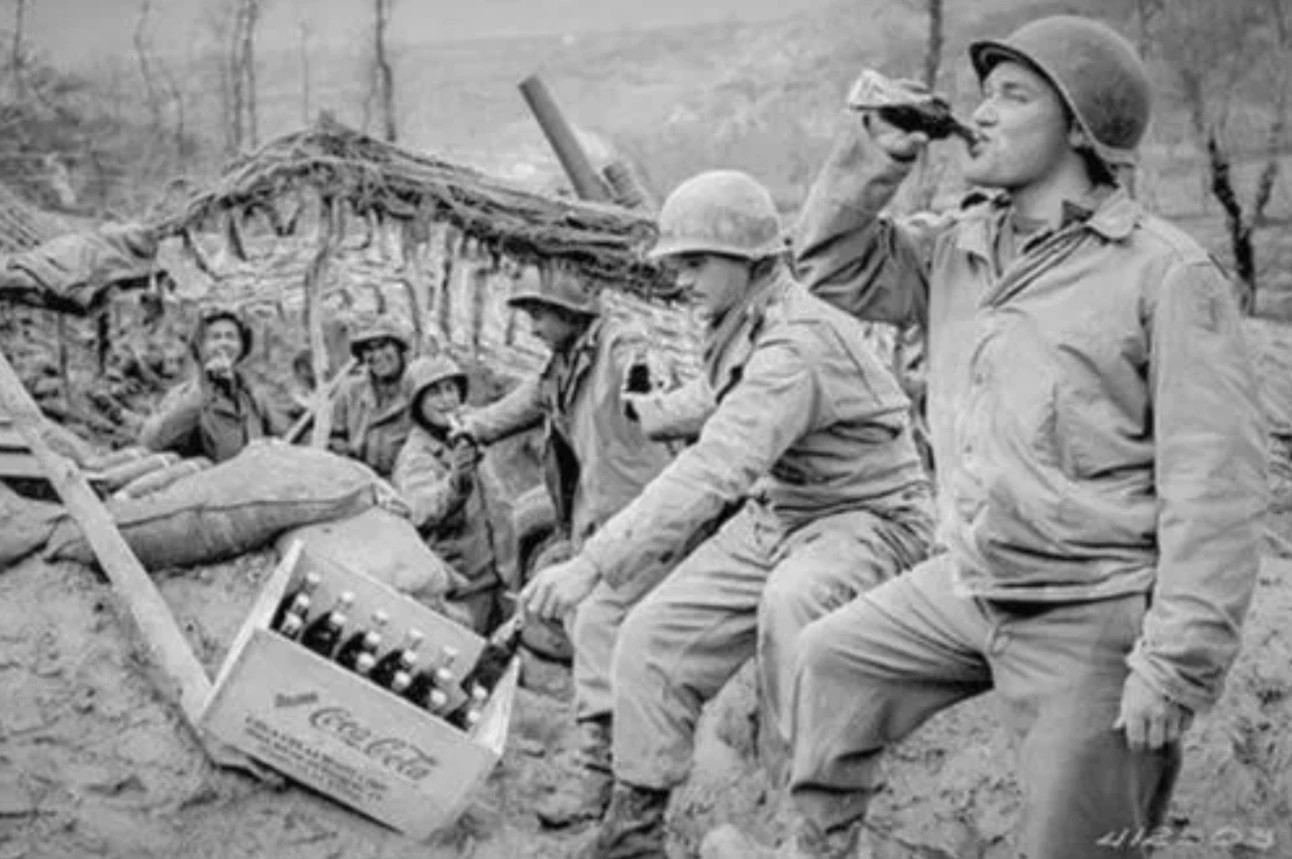
While Pepsi filed for bankruptcy after the 1942 sugar shortage, Coca-Cola had its most successful campaign…ever.
It was WW2 and the public was looking for any way to help US soldiers win the war.
So it was simple…
All Coca-Cola had to do was convince the US that buying a Coke meant helping a soldier.
Coca-Cola promised to give every US soldier a Coke no matter where they were.
By the end of WW2, Coca-Cola had warehouses in over 48 countries.
Today, Coca-Cola gives more than 2 million beverages each day to soldiers, reservists, retirees, and their families.
2 - Coca-Cola Girls
I think this one speaks for itself….
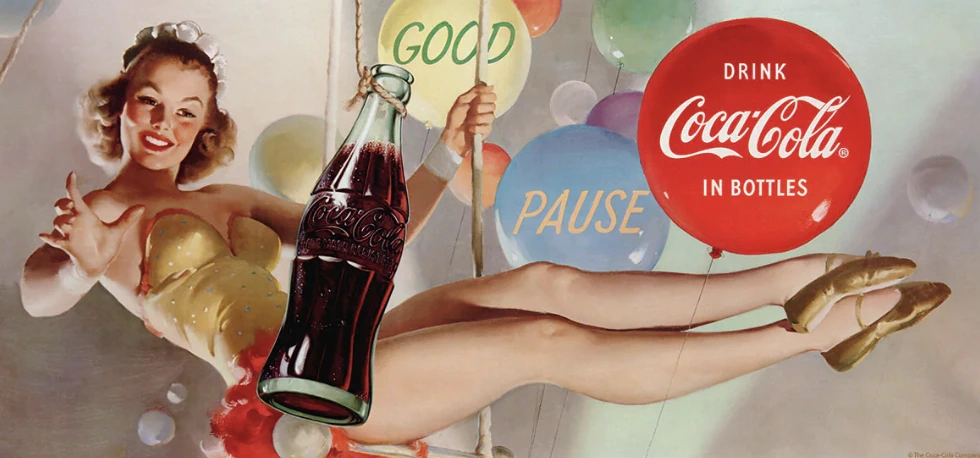
This was a fairly new concept at the time for non-alcoholic drink companies and brought a lot of new attention to Coca-Cola.
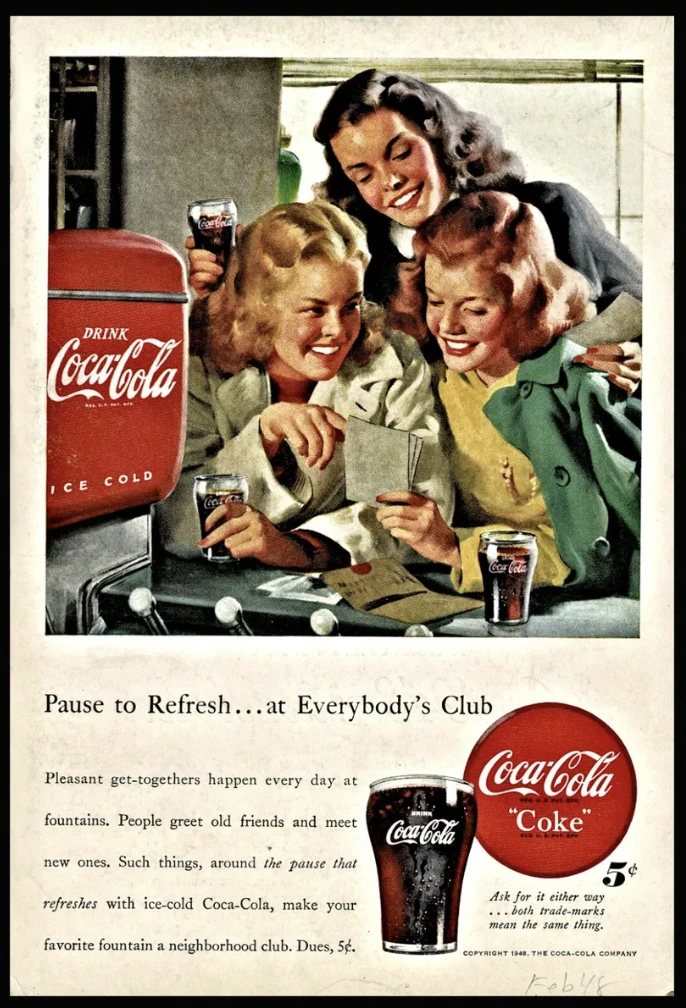
But it wasn’t just the image or pretty women. It was the idea that women would go to places that served Coke.
60 years ago it was local restaurants. Today, it’s parties.
3 - The Younger Generation
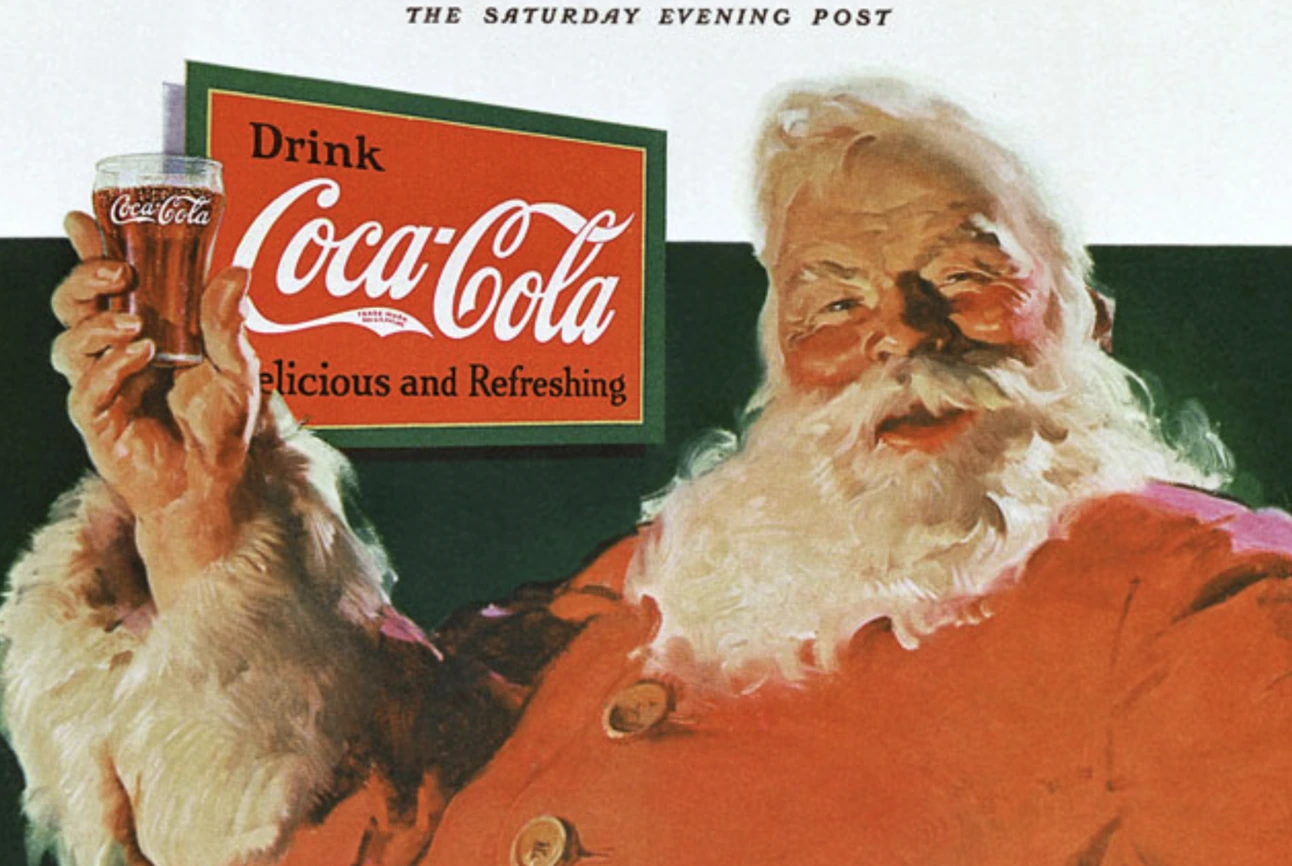
Not only does Coca-Cola have more followers on every social media platform, but they also ‘own Christmas’ with their famous Santa ads.
The strategy: Older buyers have already chosen Pepsi or Coke. Market to younger generations so they try you first.
Pepsi tried to replicate these same tactics during the Cold War in the USSR.
(It was one of the only countries where Coca-Cola did not have brand loyalty.)
In exchange for Pepsi sales, the USSR offered to send them an entire arsenal of warships to sell.
Had Pepsi kept the ships, Pepsi would have been the 6th largest military at the time.
Our Business Is... Everything?
It's been a long time since Pepsi just sold Pepsi and Coca-Cola just sold Coke.
Today both brands sell coffee, sports drinks, lemonades, and other sodas.
But Coca-Cola is exclusively a beverage brand…
Pepsi has acquired 30 companies ranging from beverages to sportswear.
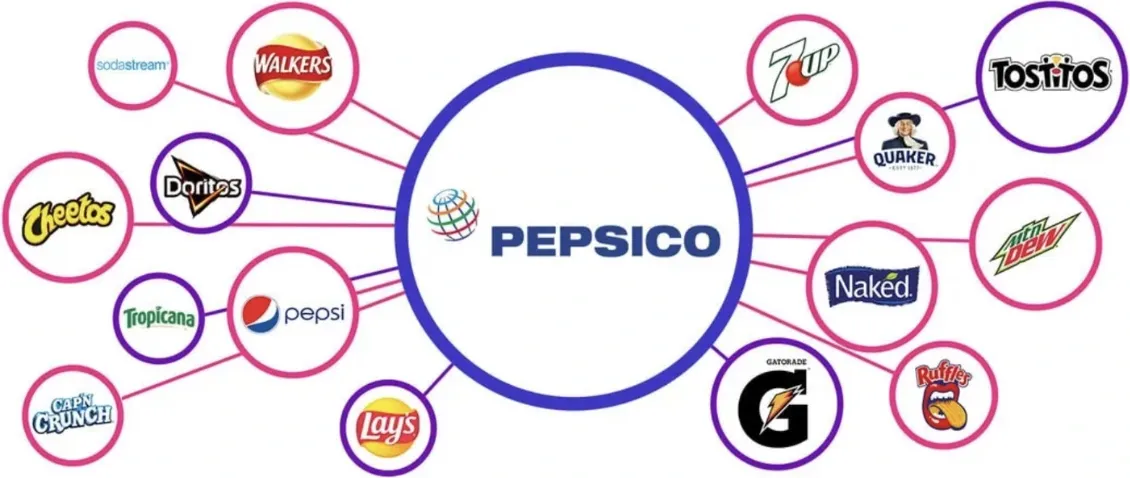
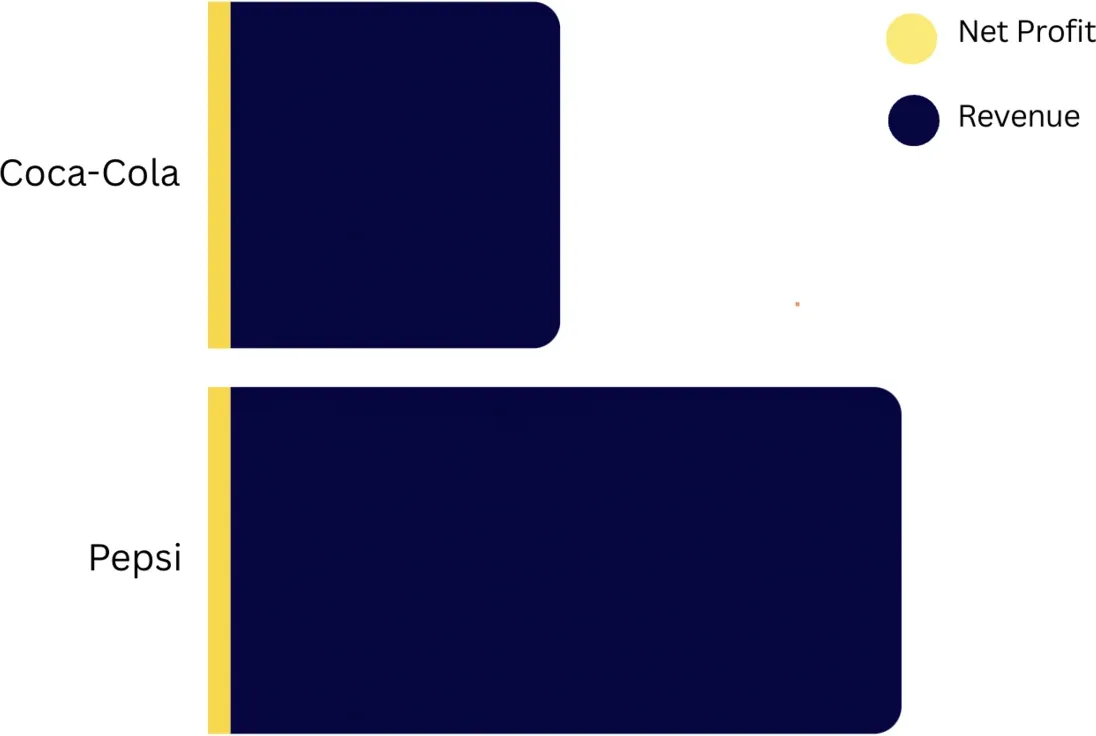
Graph by BusinessModelAnalyst
So while Coca-Cola has the privilege of focusing on one type of product, Pepsi has spent its time learning to sell in 5 different markets.
You can imagine how much this has hurt their productivity.
But to give you some context…
In 2023, Coca-Cola made $45.030B in rev, and Pepsi made $91.617B.
Yet, they had almost the same net profit for the year.
At the end of the day, Pepsi is doing just fine. They’re the 2nd largest drink company and the 2nd largest snack company (Nestle is #1).
But as far as the Cola Wars go, I think Pepsi will continue to fight a losing battle.