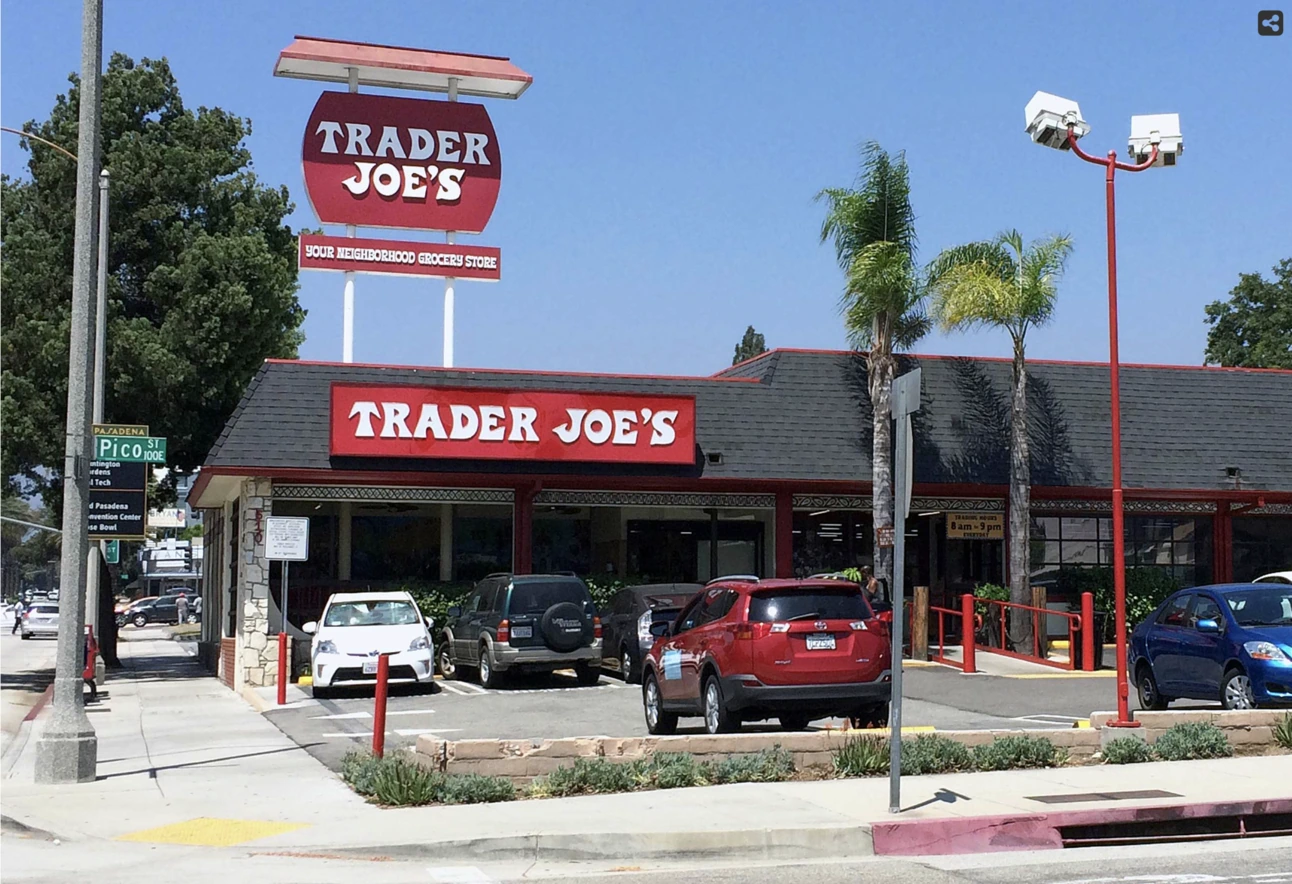
Beat the Giants
Today we look at how Trader Joe’s became a $16 billion grocery cult by ignoring every modern retail rule—and why fans lined up anyway.
“Time and again I am asked why no one has successfully replicated Trader Joe’s...
…The answer is that no one has been willing to pay the wages and benefits, and thereby attract—and keep—the quality of people who work at Trader Joe’s.”
— Joe Coulombe, Founder of Trader Joe’s
The Oddball Store That Outsmarted Giants
In the late 1960s, grocery was a game of scale. Big chains, endless shelves, mass promotions.
Joe Coulombe wasn’t interested.
He envisioned a store for “educated, adventurous eaters on a budget.” People who cared about global food, good wine, and quirky finds—but didn’t want to pay Whole Foods prices.
That little store became Trader Joe’s, a chain that would eventually balloon into 500+ locations and over $16 billion in revenue—all while breaking every rule in retail playbooks.
No loyalty cards. No digital coupons. No online shopping cart. And definitely no Facebook ads.
Instead of competing on scale like Kroger or Walmart, Trader Joe’s faced a challenge: how do you stand out in a low-margin, cutthroat industry without looking like everyone else?
Shrink the Store, Grow the Love
Trader Joe’s flipped the entire grocery formula.
While most supermarkets stock 50,000+ items, TJ’s slashed that to around 4,000—and made most of them private label. That gave them higher margins and full control over product selection, pricing, and vibe.
Instead of just food, they sold taste. Think $2 “Two-Buck Chuck” wine, “Everything but the Bagel” seasoning, and snacks with cult followings.
But it wasn’t just the product strategy—it was the experience.
They skipped the tech arms race and doubled down on the in-store vibe:
Hawaiian-shirted staff who are paid well above industry average
Free samples, tastings, and hand-drawn signs
Localized murals and product mixes to match each community
A website that proudly doesn’t sell anything
Founder Joe Coulombe believed the key was simple: pay people well, treat customers better, and make shopping fun. While others chased scale, Trader Joe’s chased loyalty—and nailed it.
The biggest twist? Their largest marketing investment was the sample station. Everything else came from word-of-mouth and a goofy printed newsletter called the Fearless Flyer.
A Cult Brand With No Coupons, No Problem
While competitors spent millions fighting over ad impressions, Trader Joe’s opened stores where fans lined up around the block.
With just 10–15k square feet per location, their stores aren’t big—but they’re mighty. TJ’s generates 4–6x more sales per square foot than traditional grocery chains. That’s practically unheard of.
By 2023, they hit over 500 locations. Yet every store still feels like a neighborhood market. It’s intimate, local, and personal—even if it’s part of a national network.
And their approach works so well, other grocers try to copy it: curated selections, private-label products, focus on experience. But few succeed, because they miss the core insight:
Trader Joe’s didn’t try to be everything to everyone. It picked a niche—and doubled down.
That’s the takeaway: You don’t need to be the biggest, loudest, or flashiest. You just need a sharp point of view, a loyal audience, and the guts to build a business that doesn’t follow trends—it starts them.
Key figure:
$1,750 Estimated sales per square foot at Trader Joe’s – Far surpassing grocery competitors like Walmart ($400) and Target ($300), highlighting its operational efficiency and store productivity.
Trader Joe’s locations maintain a smaller size than many grocery stores – Focusing on about 4,000 SKUs, which streamlines shopping while still offering a diverse product range.
6% year-over-year visit growth – Visits to Trader Joe’s stores rose by about 6% in 2024 compared to the previous year, showing strong consumer demand despite inflation and increased grocery competition.
3.2% increase in visits per location – Trader Joe’s saw a 3.2% rise in average visits per store in 2024, indicating growing popularity even at established locations.
Dozens of new stores in the 2025 pipeline – Trader Joe’s has announced dozens of new store openings for 2025, continuing its strategy of steady, organic growth rather than acquiring other chains.