Four Paths to Growth
Growth has different paths. Each asks a different question of the business.
4 minute readBegin readingFacebook started in a small Harvard dorm…
Apple started in a family garage…
Coca-Cola was designed in a small Georgia pharmacy…
These are three of the most successful businesses in the world. Yet, they all started in what most consider ‘impossible’ conditions.
Today, we’ll talk about a strategy each of these three companies and many others have used to go from $0 to market leaders…
The strategy?
The Ansoff Matrix - The 4-step formula to conquer any market.
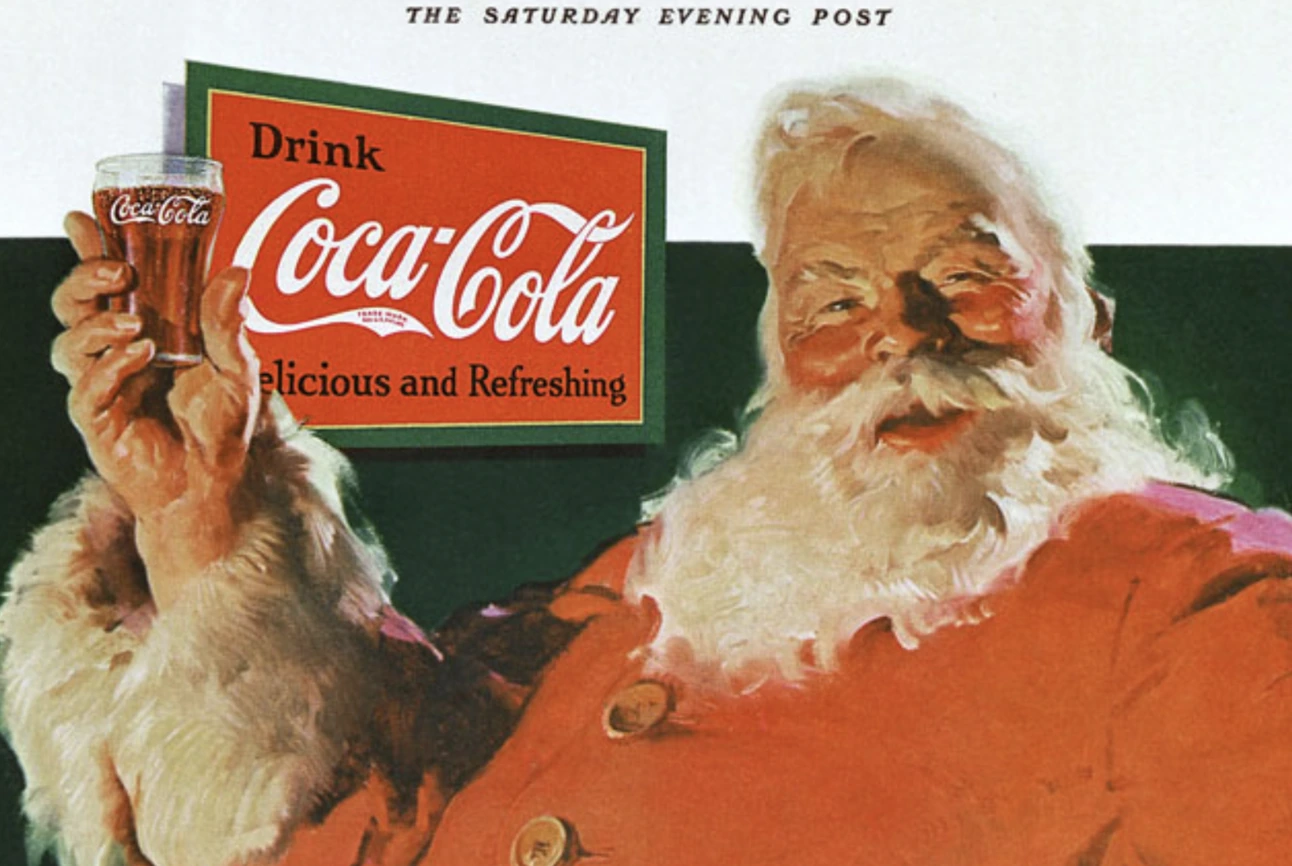
Why Coke Claimed Christmas
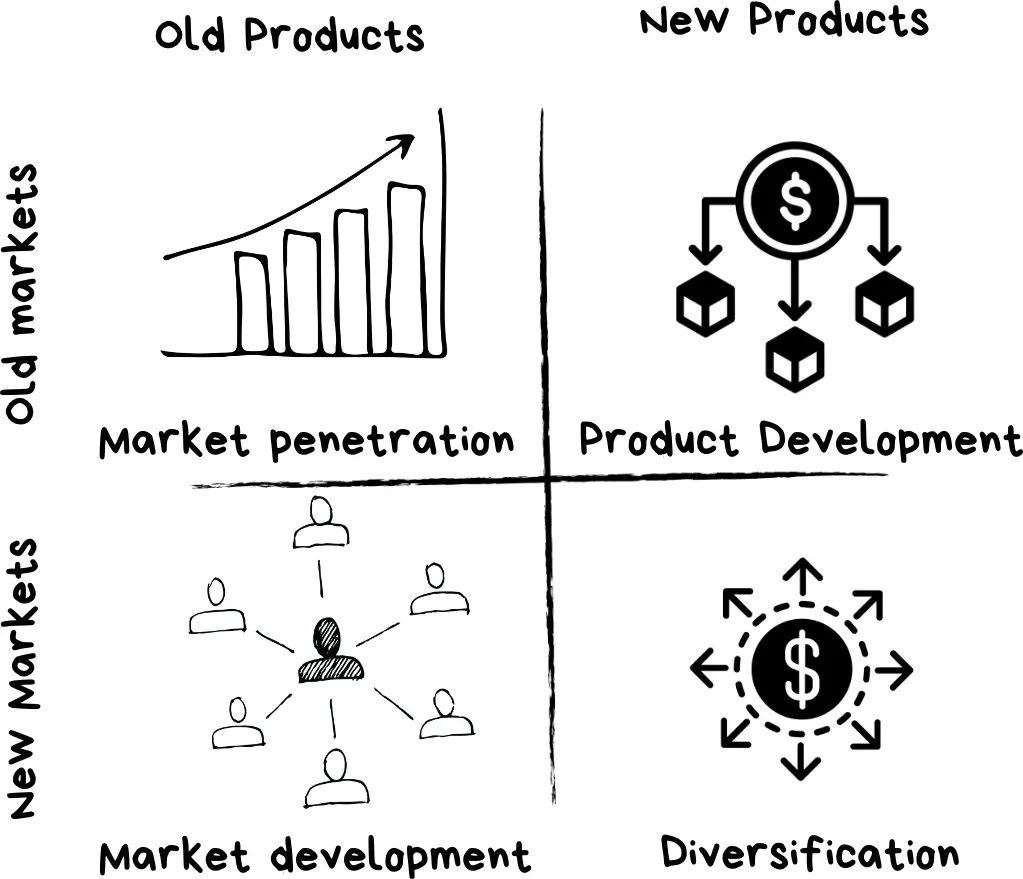
Created by H. Igor Ansoff, the Ansoff Matrix is made of 4 parts:
Most companies follow one path:
Market Penetration → Market Development → Product Development → Diversification
Let’s start with step #1 - Market Penetration.
AKA selling what works to one market.
This is the stage where Coca-Cola only sold Cokes to middle-class teens…
And Nike only sold shoes to college track runners…
In smaller companies like dropshipping stores, this looks like:
Increasing ad/ marketing spend in one niche
Acquiring smaller businesses in that market
Making small changes to improve the product and boost sales
Although this first step is the simplest, it’s where most businesses get stuck.
Why?
Because it’s not just about selling what works, but also getting your customers to buy as often as possible.
The most common way to do this is via subscriptions.
Dollar Shave Club → $10 for monthly razors
BarkBox → $35/ month for a box of dog toys
But other brands find a way to associate themselves with major events that remind buyers to purchase from them.
Starbucks offers you a free hot drink on your birthday…
And Coke ‘owns’ Christmas…
Companies start and stay here until they hit their first S-curve. This is the point where the product starts to become saturated in that market.
And that’s when we move to the next step…
Old product, new market.
The World's Best-Selling Cookie
Every year, 60 billion Oreos are sold around the world.
That’s 7.6 cookies for every person on the planet.
But Oreo did not become the best-selling cookie in the world because their cookies taste amazing…
It’s because they’ve become the king of geographic marketing.
This is step #2 of the Ansoff Matrix - Selling your perfected product to new markets.
Companies do this in 3 ways:

1 - Geographically
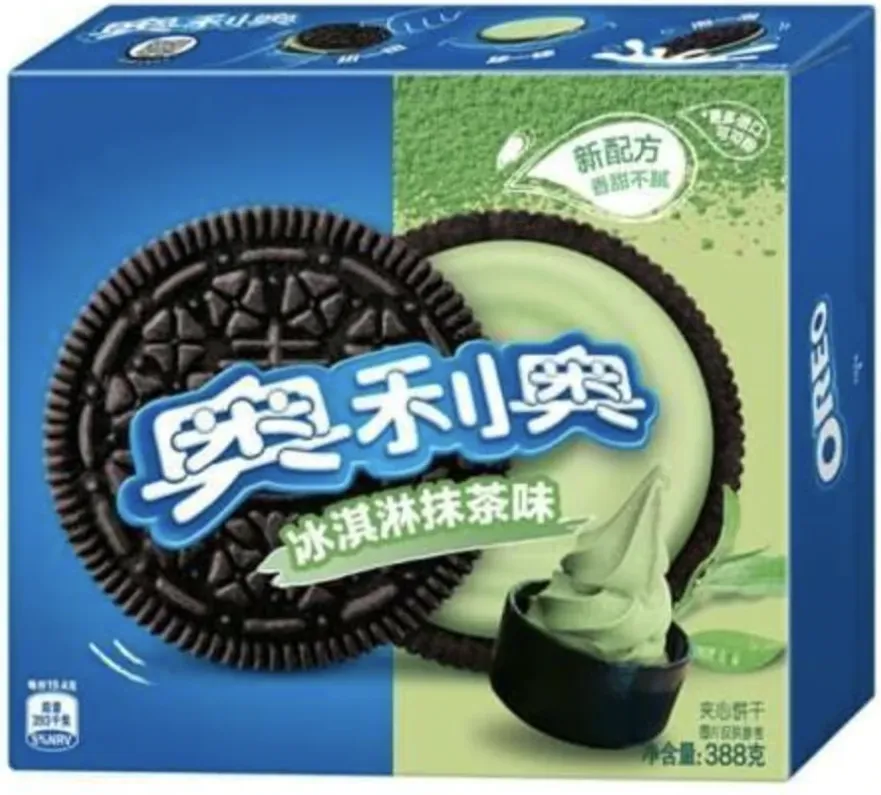
Oreo started as a US company. Today, they sell 60 billion Oreos every year worldwide.
In Venezuela, their best-selling flavor is milk chocolate. In China, it’s green tea with 27% less sugar.
2 - Selling via new channels
We see this the most with major retailers like Walmart and Target who have expanded to online stores.
Or drive-thru restaurants like McDonald’s which now offers delivery.
3 - New buyer types
Crocs began as a boating shoe. Today they target everyone from families to medical professionals.
Same product, different markets.
The $1.65B Gamble
Once companies have a base of repeat customers (a brand), they expand to new products they can sell to their base market.
Usually, markets that complement their original product.
Now don’t get me wrong…
I don’t mean upsells or cross-promos.
This is much bigger than that.
Most companies do this by acquiring smaller companies in new markets.
Like in 2006 when Google took a $1.65B bet and bought YouTube.

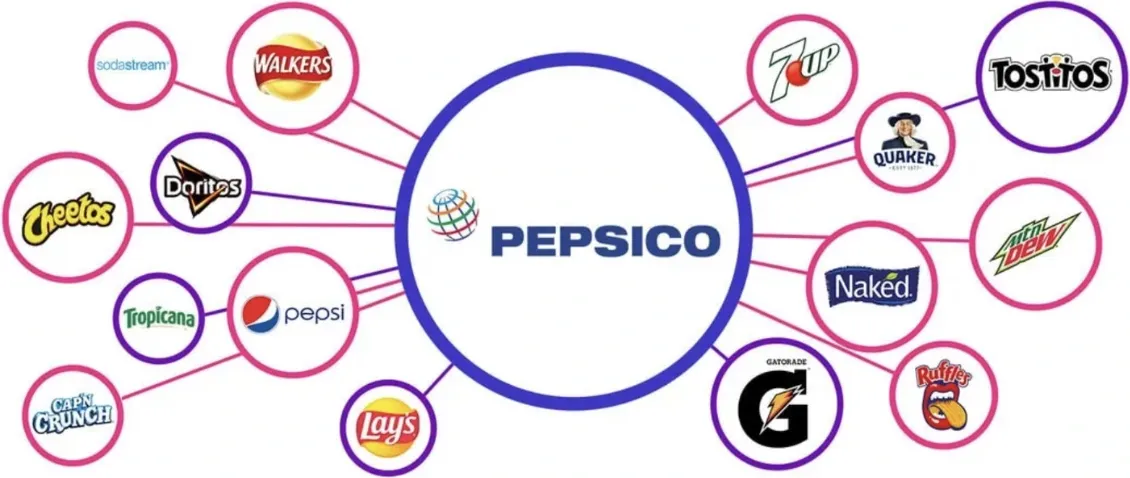
Or Pepsi, who owns 30+ companies ranging from drinks to sportswear.
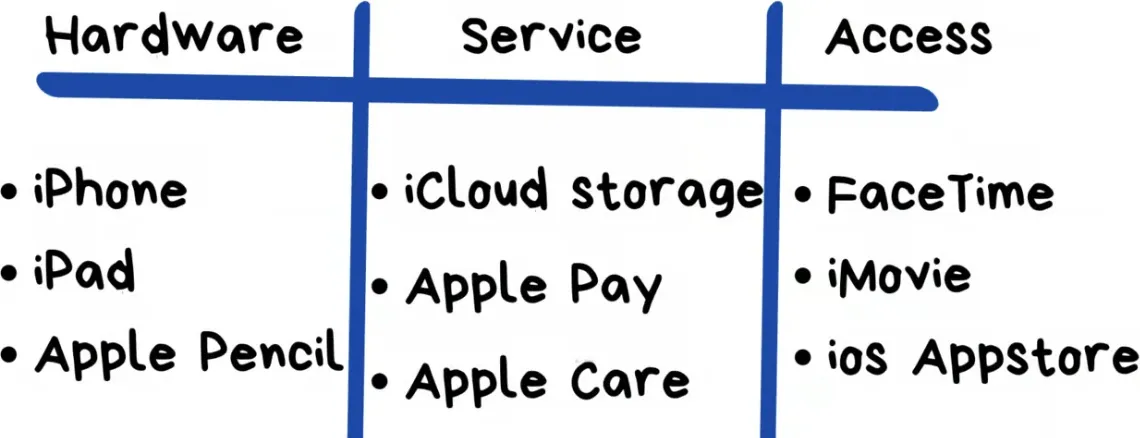
Other times they release updated or new items. Kinda like Apple and its tech ecosystem.
BU this is the step where most companies stop.
Why?
Because the next step is where billion-dollar companies either make it to a trillion or lose it all…
From $47B To Bankrupt
In 2008, WeWork sounded like the best idea of the 21st century.
With remote work on the rise, WeWork had tons of big-name investors like Benchmark, SoftBank, and Goldman Sachs lining up at their doorsteps.
In 2016, WeWork opened an apartment complex named WeLive.
And in 2018, they opened a daycare named WeGrow.
By 2019 the company was valued at $47B.

But last November, WeWork filed for bankruptcy.
What happened?
Diversification. New products, new markets.
For WeWork, this was their end. But for other companies like Facebook and Apple, it’s game-changing...
Facebook is a media company. Yet, I own a pair of Meta AR Goggles
Apple is a tech company. But in 2014, they became a credit card company.

MrBeast is the #1 YouTuber in the world. Yet he opened a fast-food burger chain.
(Which also landed in the graveyard of failed diversification attempts.)
But diversification can also mean taking over the role of suppliers/manufacturers.
Walmart and US Foods own their trucks. Pepsi and Coca-Cola own their bottling plants.
Faster service, better goods, bigger moat between you and the competition.